

Nairobi ↔ Addis Ababa · September 2026
THE E-BUS
EXPEDITION.
A cross-border relay exploring the practical requirements for long-distance electric passenger transport.
The journey
PASSENGER TRANSPORT.
REAL CONDITIONS.
Taking buses across a long-distance corridor reveals the importance of the entire operating system.
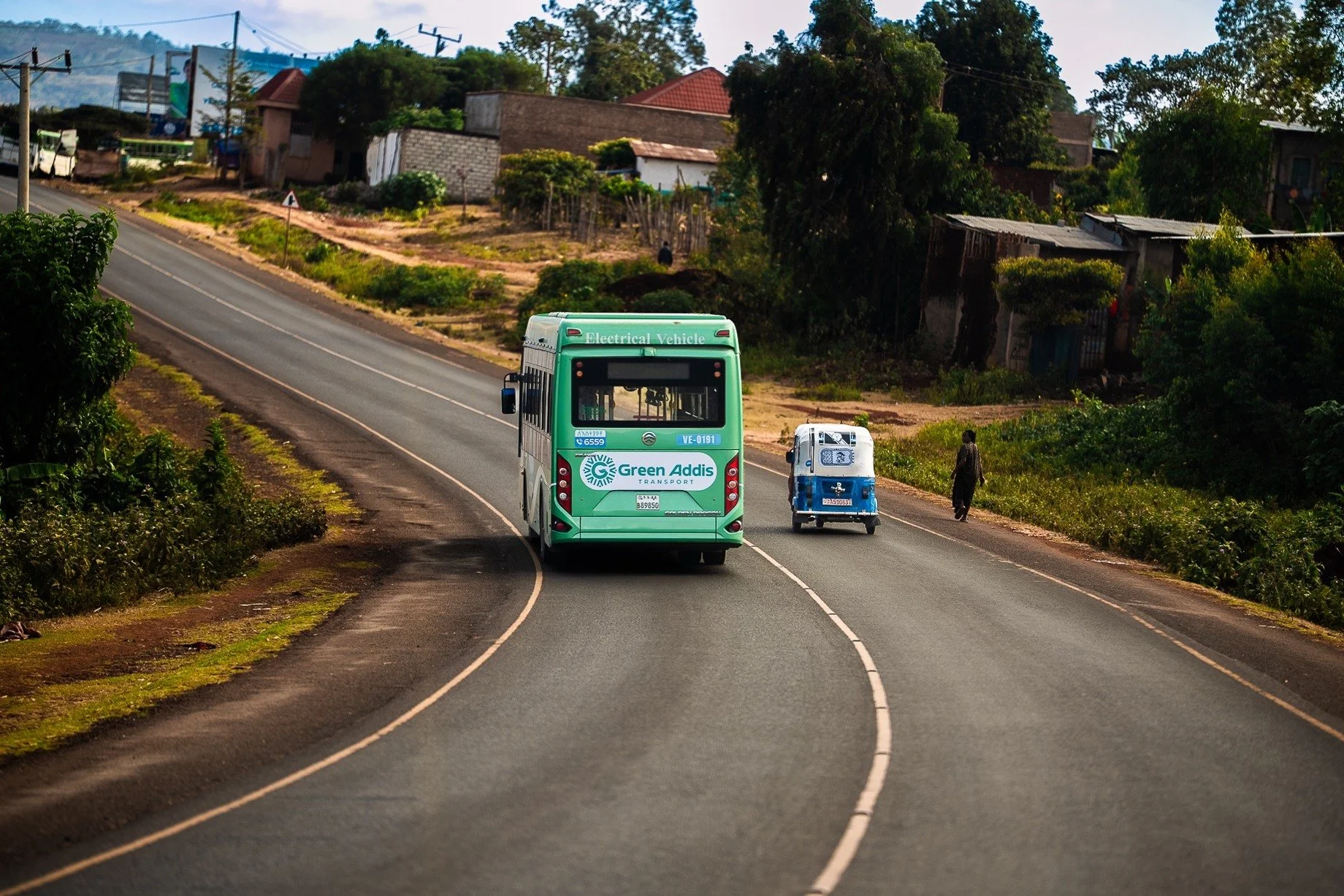
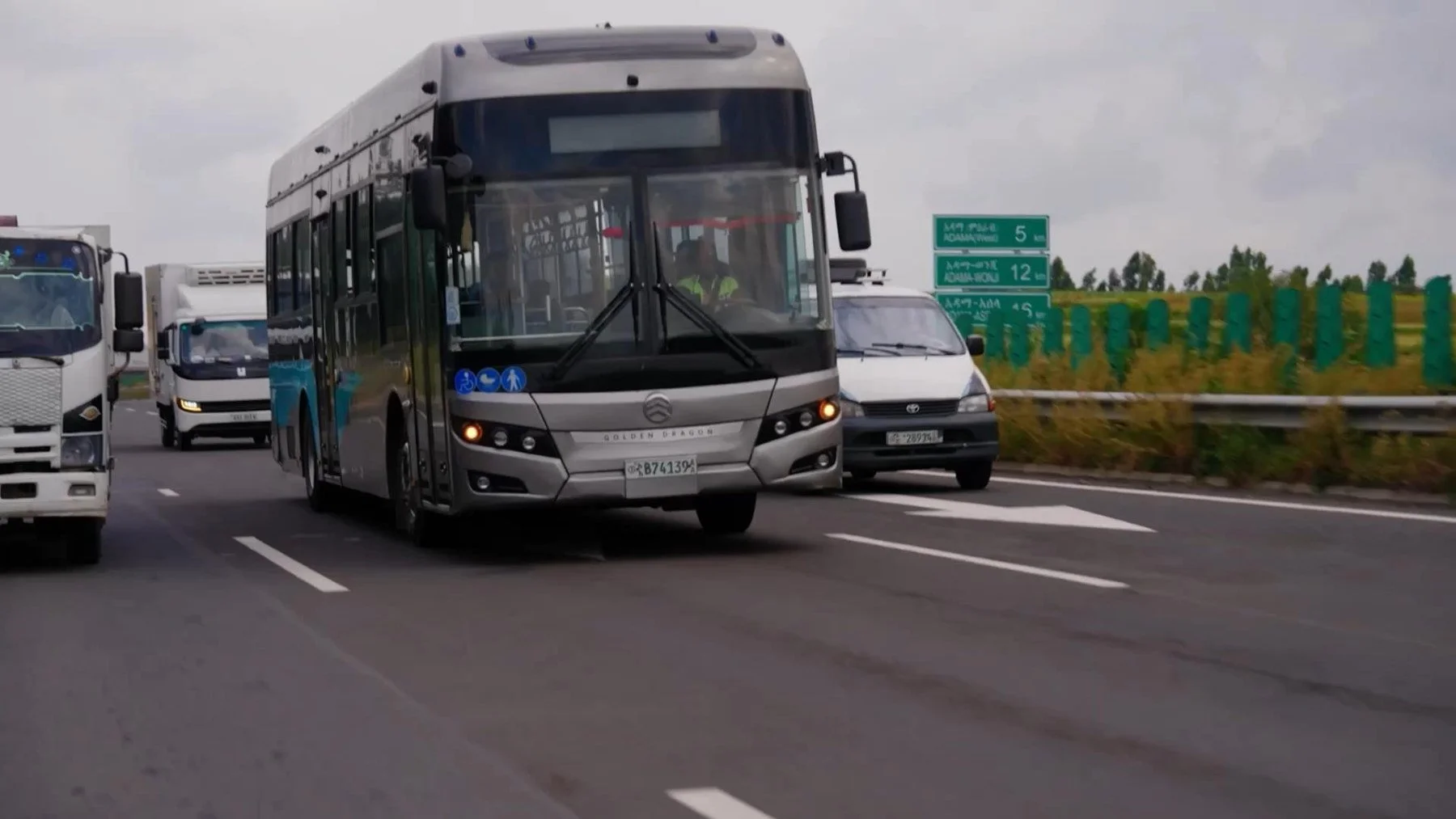
The September 2026 expedition connected Nairobi and Addis Ababa through a relay of Kenyan and Ethiopian electric buses. The buses met at the Moyale border, linking local operators and charging arrangements across two countries.
The experience went beyond vehicle range. Charging equipment, power supply, border clearance, travel time and contingency arrangements all shaped the journey.
The film
THE VISION BEHIND
THE JOURNEY.
Alex Munene introduces the cross-border e-bus initiative in this one-minute film, produced ahead of the September 2026 expedition.
A demanding timetable
THE JOURNEY
SETS THE PACE.
The outbound trip took four days rather than the planned two. The return took three. These differences are part of the learning: reliable services require schedules that reflect charging time, road conditions and the available infrastructure.
Portable charging supported stops along the northern Kenyan route. Equipment faults and power constraints reinforced the value of backup arrangements and experienced local teams.
The practical learning
WHAT A RELIABLE
CORRIDOR REQUIRES.
The report turns experience from the road into priorities for future electric bus operations.
01
Clear charging information
Map location, connector compatibility, available power, operating hours and backup options before departure.
02
Redundancy
Build alternatives for equipment failures, power interruptions and changes in vehicle availability.
03
Coordination
Connect operators, utilities, border institutions and local partners through a shared corridor plan.
04
Realistic schedules
Allow for charging, passenger needs, road conditions, clearance and adequate driver rest.
05
Operating procedures
Agree responsibilities, escalation routes, technical support and contingency plans.
06
Evidence from the road
Use operational data and honest reporting to improve planning, rather than hide the difficult parts.
The field record
BUSES, BORDERS
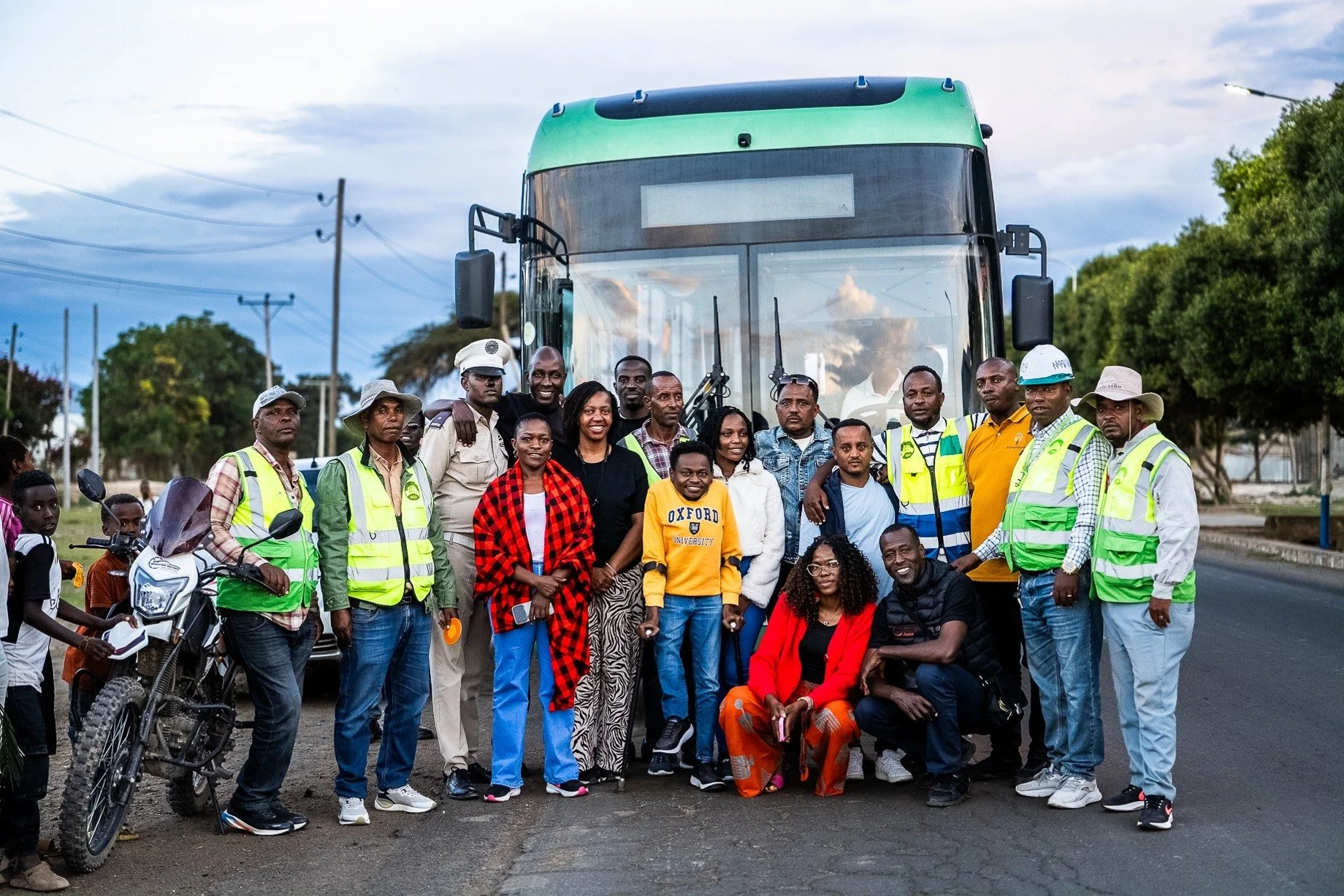
AND THE PEOPLE BETWEEN.
The collaboration
MANY HANDS.
ONE JOURNEY.
The report credits Advanced Mobility with expedition leadership, GIZ Kenya as title sponsor of the Kenyan leg, and BasiGo for buses and charging support, alongside operators and institutions across both countries.
The report was published in October; the expedition took place in September 2026. Photography is drawn from the supplied report and presentation.
THE NEXT CHAPTER
NEEDS ALL OF US.
Vehicles. Energy. Research. Stories. Bring your expertise to the road, and help turn shared ambition into practical action.